Understanding ICUMSA Ratings Guide
If you buy sugar in bulk for food production, beverages, confectionery, or industrial use, you’ve probably seen the term ICUMSA on supplier quotes. But what does it actually mean? Why do buyers care so much about the number?
This ICUMSA ratings guide explains everything clearly: what ICUMSA is, how the ratings work, the most common sugar grades, key differences, and how to choose the right one for your business.
Whether you’re sourcing ICUMSA 45 for soft drinks or higher grades for bioethanol, understanding these ratings helps you make better purchasing decisions and avoid costly mistakes.
Let’s break it down step by step.
What is ICUMSA?
ICUMSA stands for International Commission for Uniform Methods of Sugar Analysis.
Founded in 1897, ICUMSA is the global authority that sets standardized testing methods for sugar quality and purity. The organization publishes the ICUMSA Methods Book (latest major edition 2009), which includes procedures for color, polarization, moisture, ash, and more.
When people talk about “ICUMSA ratings” or “ICUMSA number,” they are usually referring to the color value measured on the ICUMSA scale.
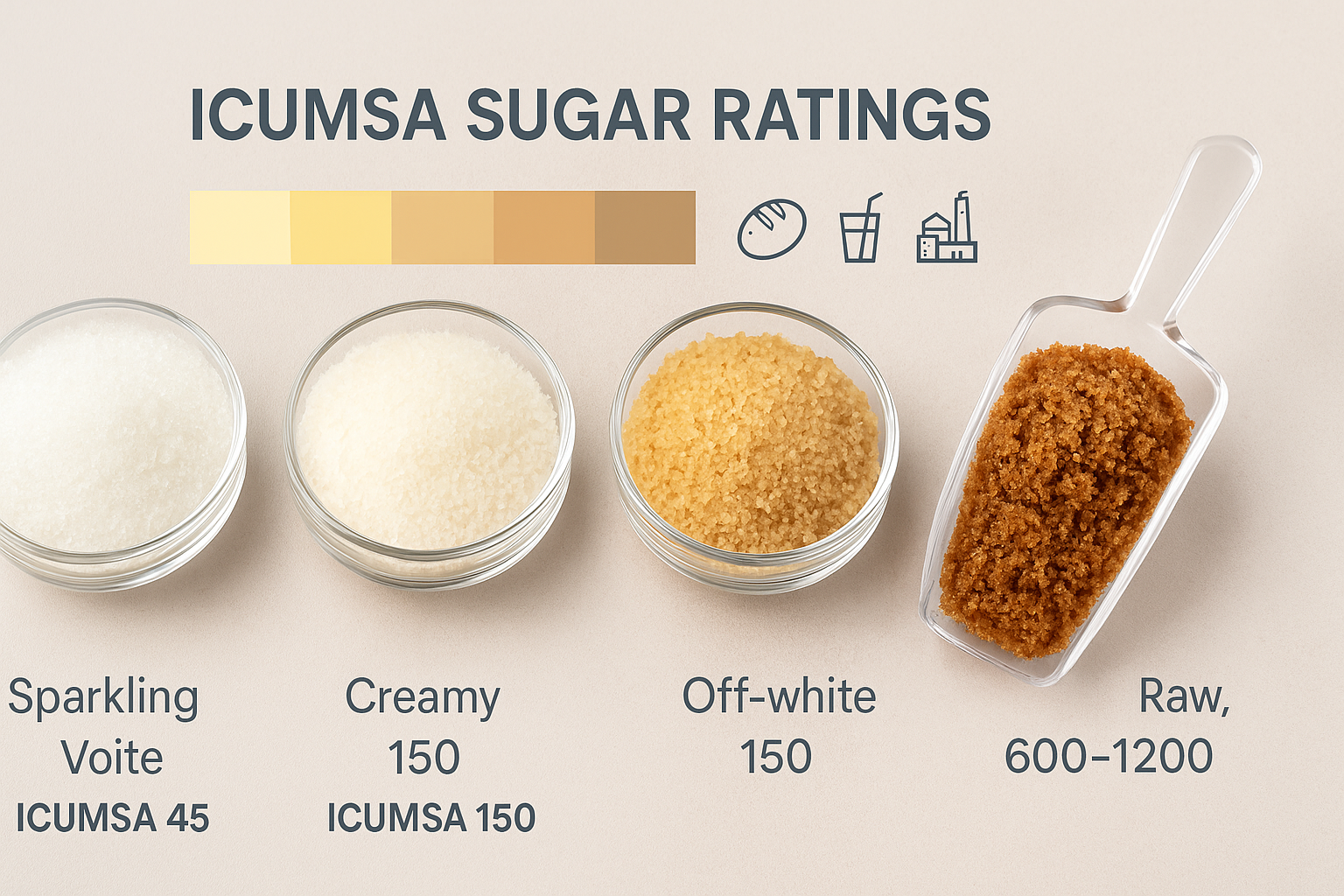
Lower ICUMSA numbers = whiter, purer sugar
Higher ICUMSA numbers = darker, more raw/natural sugar
This color rating is one of the most important specifications in the international sugar trade.
How ICUMSA Ratings Are Measured
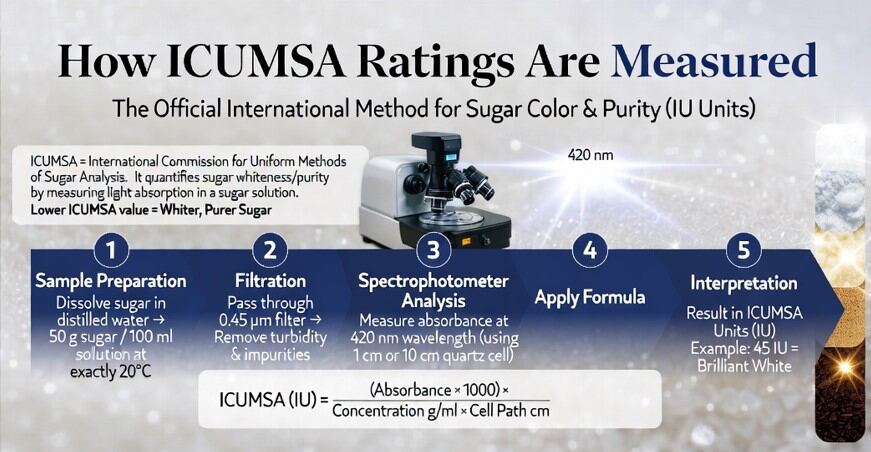
ICUMSA color is determined by measuring how much light at 420 nm wavelength is absorbed by a sugar solution.
The result is expressed in Reference Basis Units (RBU).
Key points:
- The test uses a standardized sugar solution (usually 50% concentration).
- The extinction coefficient at 420 nm is calculated.
- Lower absorbance = lower ICUMSA number = whiter sugar.
- The scale is not linear — the difference between ICUMSA 45 and 100 is much more significant than between 600 and 1200.
This method ensures buyers and sellers worldwide speak the same language when trading sugar.
Common ICUMSA Sugar Grades Explained
Here are the most traded grades and what they mean in practice.
ICUMSA 45 – Extra Refined White Sugar
- Color: ≤45 RBU (very low)
- Appearance: Bright white, sparkling crystals
- Purity: ~99.8% sucrose
- Typical uses: Soft drinks, confectionery, premium baking, pharmaceuticals
- Origin: Mostly Brazil (cane), sometimes Europe (beet)
- Best for: Applications where color and clarity matter most
ICUMSA 100 – Refined White Sugar
- Color: ≤100 RBU
- Appearance: White, slightly less brilliant than 45
- Purity: High
- Typical uses: General food processing, beverages, bakery
- Best for: Cost-effective refined sugar when ultra-white is not required
ICUMSA 150 – White Refined Sugar
- Color: ≤150 RBU
- Appearance: White to off-white
- Typical uses: Bakery, dairy products, confectionery, general industrial
- Best for: Versatile grade offering good value
ICUMSA 600–1200 – Raw Brown Cane Sugar
- Color: 600 to 1200 RBU
- Appearance: Light to dark brown, visible molasses
- Purity: Lower than refined grades
- Typical uses: Refining into white sugar, bioethanol production, animal feed, organic products
- Best for: Industrial and cost-sensitive applications
VHP (Very High Polarization) Raw Sugar
- Polarization: Usually >99.5°
- Color: Often falls in 600–1200 range
- Typical uses: Direct refining or industrial fermentation
- Best for: High-efficiency industrial buyers
Beet Sugar (Refined)
- Source: Sugar beet (Europe, North America)
- Color: Comparable to ICUMSA 45–150
- Taste: Very neutral (less molasses flavor than cane)
- Typical uses: Confectionery, pharmaceuticals, products where flavor neutrality is critical
Key Differences Between ICUMSA Grades (Comparison Table)
| Grade | Color (RBU) | Purity (Sucrose) | Appearance | Main Uses | Price Level |
|---|---|---|---|---|---|
| ICUMSA 45 | ≤45 | ~99.8% | Bright white | Soft drinks, premium confectionery | Highest |
| ICUMSA 100 | ≤100 | High | White | Food processing, beverages | High |
| ICUMSA 150 | ≤150 | High | White to off-white | Bakery, dairy, general food | Medium |
| ICUMSA 600–1200 | 600–1200 | Lower | Brown | Refining, bioethanol, animal feed | Lower |
| VHP Raw | Varies | >99.5° pol | Brown | Industrial refining | Lower |
| Beet Sugar (refined) | Low | High | White | Pharma, confectionery (neutral taste) | Medium-High |
Lower ICUMSA grades require more processing steps → higher cost.
Higher ICUMSA grades are closer to raw cane → lower cost but darker.
Applications of ICUMSA Ratings in Industries
Different industries demand different ICUMSA levels:
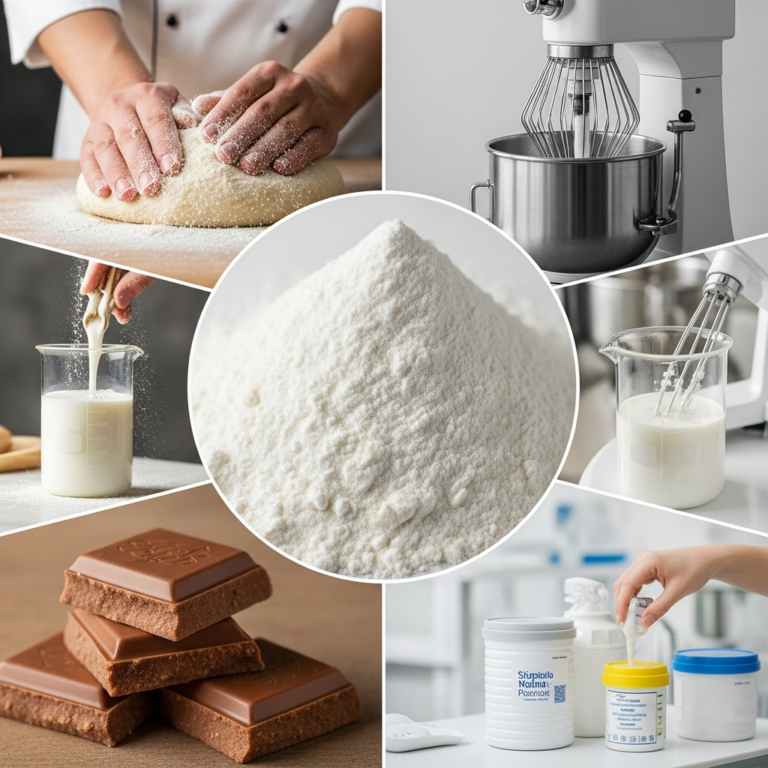
- Soft Drinks & Beverages
→ ICUMSA 45 is the standard. Clear liquid appearance is critical. - Confectionery & Chocolate
→ ICUMSA 45 or 100. White color and neutral taste are preferred. - Bakery & Dairy
→ ICUMSA 100–150 works well. Cost vs. quality balance. - Bioethanol & Fermentation
→ ICUMSA 600–1200 or VHP. High sucrose content matters more than color. - Animal Feed & Organic Products
→ Higher ICUMSA raw grades. Molasses content can be beneficial. - Pharmaceuticals
→ Beet sugar or ICUMSA 45. Strict purity and neutral flavor required.
Choosing the wrong grade can lead to off-colors, taste issues, or unnecessary extra costs.
Why Choose the Right ICUMSA Grade?
Benefits of matching grade to application:
- Consistent final product color and taste
- Compliance with food safety regulations
- Cost optimization (don’t overpay for unnecessary whiteness)
- Better shelf life and stability
- Stronger brand image (especially in premium segments)
Tips for B2B buyers:
- Always request the latest ICUMSA certificate of analysis.
- Specify packing (50 kg bags, big bags, bulk containers).
- Ask about origin and sustainability certifications.
- Compare total landed cost, not just price per ton.
Ready to Source High-Quality ICUMSA Sugar?
Understanding ICUMSA ratings helps you buy smarter and avoid common pitfalls. At The World Merchants, we supply a full range of ICUMSA sugar grades — from premium ICUMSA 45 to industrial raw sugar — sourced ethically from Brazil, Thailand, India, and beyond. We offer bulk options, global logistics, and full documentation.
Ready to source high-quality ICUMSA sugar? Contact The World Merchants today for a quote.
FAQ About ICUMSA Sugar Ratings
1. What does ICUMSA mean?
Answer: ICUMSA stands for International Commission for Uniform Methods of Sugar Analysis. It sets global standards for testing sugar quality and color.
2. What does the ICUMSA number indicate?
Answer: It measures sugar color. Lower number = whiter, more refined sugar. Higher number = darker, less refined sugar.
3. Why is ICUMSA 45 more expensive?
Answer: ICUMSA 45 is highly refined, bright white sugar with very low color (≤45 RBU), requiring more processing, which increases cost.
4. Which industries use ICUMSA 45?
Answer: Soft drinks, confectionery, pharmaceuticals, and premium bakery products where clarity and purity are important.
5. How do I choose the right ICUMSA grade?
Answer: Select based on your application. Beverages need low ICUMSA (45), while industrial uses like bioethanol can use higher grades (600–1200) to reduce costs.
Let’s build a reliable, long-term partnership.