Cheddar Cheese Processing: Quality Standards Explained
Cheddar cheese remains one of the most widely used cheeses in industrial food production worldwide. Its versatility, long shelf life, and consistent meltability make it a staple in fast food, ready meals, snacks, sauces, and bakery products.
For B2B buyers, understanding cheddar cheese processing and quality standards is essential. Poor quality leads to defects in texture, flavor inconsistency, or production waste.
This guide explains the key steps in cheddar cheese processing, the most important quality standards, what buyers should check, and how The World Merchants ensures reliable supply.
The Traditional Cheddar Cheese Making Process

Cheddar production follows a well-defined sequence. Modern industrial lines automate most steps while preserving traditional techniques.
1. Milk Reception & Standardization
Fresh milk arrives and is standardized to 3.5–4.0% fat. Pasteurization (72°C / 15 s) kills pathogens.
2. Coagulation
Starter cultures and rennet are added. Milk sets into curd within 30–60 minutes.
3. Cutting & Cooking
Curd is cut into small cubes. Gentle stirring and heating (38–40°C) expels whey.
4. Cheddaring
The signature step. Curd slabs are stacked, turned, and rested. This expels more whey and develops texture.
5. Milling & Salting
Curd is milled into chips. Salt is added evenly (1.5–2.0%).
6. Moulding & Pressing
Salted curd is filled into moulds and pressed (up to 24 hours) to form blocks.
7. Maturation
Blocks are vacuum-packed and aged. Mild cheddar matures 3–6 months, mature/sharp 9–24 months.
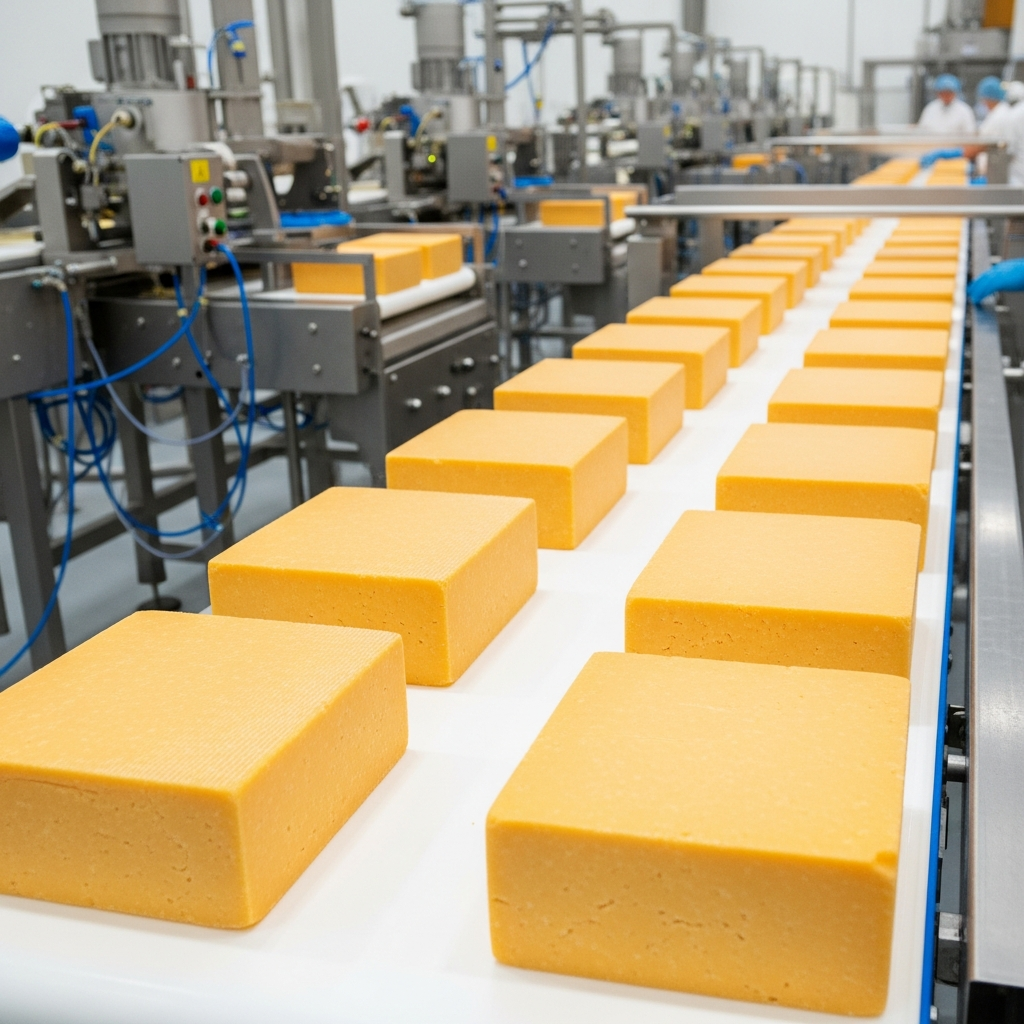
Industrial plants use block formers and automated pressing for consistency.
Critical Quality Standards for Cheddar Cheese
Buyers focus on these parameters to ensure consistent performance.
| Parameter | Typical Specification | Why It Matters |
|---|---|---|
| Milkfat in Dry Matter | 48–52% (full-fat cheddar) | Affects meltability and flavor richness |
| Moisture | 35–39% | Controls texture and shelf life |
| Salt | 1.6–2.0% | Flavor balance & microbial control |
| pH (at packaging) | 5.1–5.4 | Texture, melt, and flavor development |
| Maturity / Age | 3–24 months | Flavor intensity (mild vs sharp) |
| Microbiological | <10,000 CFU/g total count | Food safety compliance |
| Free Fatty Acids | Low (fresh) to moderate (mature) | Indicates proper aging & no rancidity |
| Melt & Stretch | Good melt, controlled stretch | Critical for pizza, burgers, sauces |
Regular testing (pH, moisture, fat) during production prevents defects.
Codex Alimentarius – Cheese Standards
(Reference: Codex Alimentarius Commission)
Common Quality Issues & How to Avoid Them
Buyers frequently encounter these problems:
1. Poor melt / grainy texture
→ Caused by high moisture or improper pH. Demand consistent pressing.
2. Off-flavors / rancidity
→ High free fatty acids from poor storage or old milk. Require low FFA on COA.
3. Uneven color / white spots
→ Incomplete cheddaring or salt distribution. Ask for visual inspection reports.
4. Crumbly or short texture
→ Over-maturation or high acid development. Specify exact aging period.
5. Microbiological contamination
→ Insufficient pasteurization or hygiene. Insist on accredited lab results.
Always request recent COA and third-party audit reports.
Read about quality assurance in commodity trading →
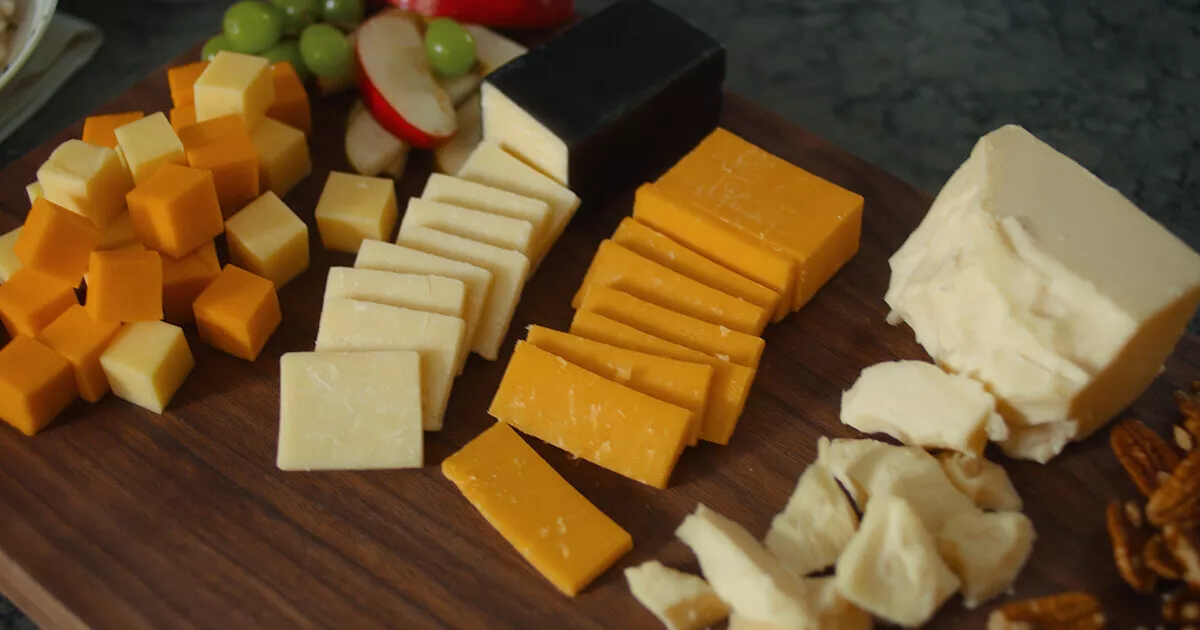
Cheddar Types for Industrial Use
1. Mild Cheddar (3–6 months)
Creamy, mild flavor. Ideal for processed cheese, sauces, snacks.
2. Medium / Mature Cheddar (6–12 months)
Balanced sharpness. Popular in burgers, pizza, sandwiches.
3. Sharp / Extra Sharp (12–24+ months)
Intense flavor. Used in premium sauces, gourmet products.
4. Processed Cheddar
Blended and emulsified. Excellent melt for fast food and ready meals.
5. Reduced-Fat / Low-Fat Cheddar
Growing demand in health-oriented lines.
Choose the aging level that matches your recipe.
Packaging & Bulk Supply Options
Common B2B formats:
40 lb / 18 kg blocks (most common for industrial use)
640 lb / 290 kg blocks (for large processors)
Shredded / diced cheese (frozen or chilled)
Custom cuts and private labeling
Storage & handling:
Frozen (−18°C) for long-term stock
Refrigerated (2–6°C) for short-term use
Avoid temperature abuse to prevent mold and texture defects.
Why The World Merchants for Cheddar Cheese?
We specialize in reliable bulk supply of premium cheddar for manufacturers:
Sourced from certified producers (EU, USA, New Zealand)
Consistent flavor profiles and melt performance
Full traceability & COA with every shipment
ISO & HACCP certified supply chain
Flexible volumes: container loads to multi-ton contracts
Temperature-controlled global logistics
View our dairy products including cheddar cheese →
Conclusion
Cheddar cheese is more than a commodity — it’s a functional ingredient that defines texture, flavor, and melt in countless B2B products.
Understanding processing steps, quality standards, and specification checks helps buyers avoid defects and secure consistent performance. At The World Merchants, we deliver cheddar cheese that meets industrial demands — reliable quality, full documentation, ethical sourcing, and dependable global supply.
Ready to streamline your cheddar sourcing?
Contact us today for current availability, samples, and a competitive quote.
Keep your production smooth — with cheddar you can trust.
FAQS – Cheddar Cheese Processing
1. What is the ideal fat content in cheddar cheese?
Answer: Full-fat cheddar typically has 48–52% milkfat in dry matter for rich flavor and good melt.
2. How long does cheddar cheese need to mature?
Answer: Mild cheddar: 3–6 months, Medium/Mature: 6–12 months, Sharp/Extra Sharp: 12–24+ months.
3. What causes poor melt or grainy texture in cheddar?
Answer: High moisture or incorrect pH; consistent pressing and proper aging prevent this.
4. How should industrial cheddar be stored?
Answer: Frozen at −18°C for long-term, or refrigerated at 2–6°C for short-term use.
5. Why choose The World Merchants for cheddar supply?
Answer: They offer certified producers, consistent quality, full COA, and temperature-controlled global logistics.